Seamless Versus Sectional Gutter, What the Difference Really Costs
Seamless and sectional gutter do the same job on day one. The gap opens up at the joints, one winter at a time.
September 16, 2026 · 3 min read
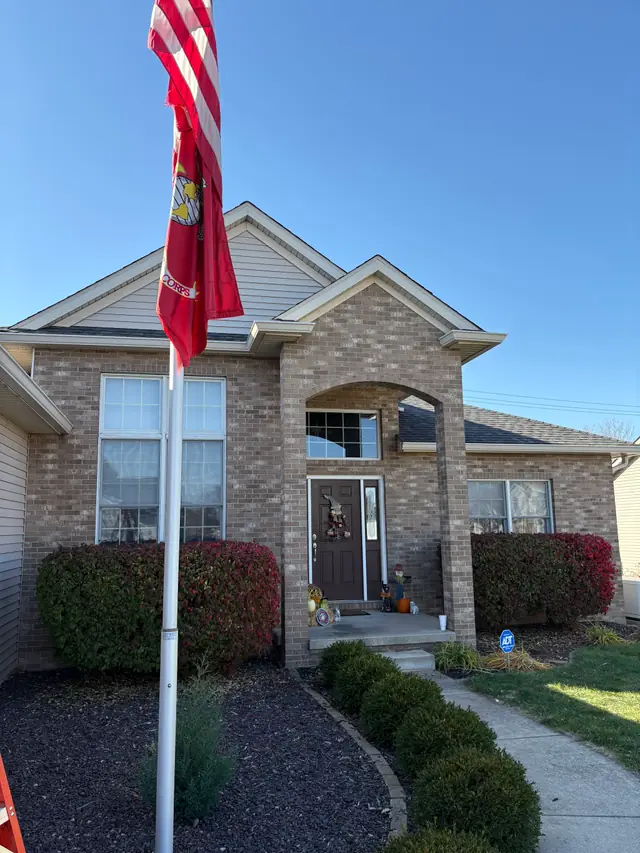
Look up at a finished gutter installation, seamless or sectional, and from the driveway they're hard to tell apart. Same profile, same color, same hangers. The difference between the two isn't something you can see the day it goes up. It shows up three, five, ten years later, and it shows up specifically at the joints.
What sectional gutter actually is
Sectional gutter comes in fixed lengths, usually around ten feet, that get joined together with connectors and sealant to cover the full run of a roofline. That means a typical house ends up with several seams along each run, wherever one section meets the next. Every one of those seams is a joint held together by sealant, and sealant is the part of any building material that ages the fastest under sun, cold and constant water.
What seamless gutter is instead
Seamless gutter is formed from coil stock on a machine right at the house, cut to the exact length of the roofline it's covering. A forty-foot run comes off the machine as one continuous piece with no joint in the middle at all. The only seams left on the whole system are at the corners and end caps, which is a fraction of the joint count a sectional run carries over the same distance.
Where the leaks actually start
Every sectional seam is a place sealant can dry out, shrink, or crack, and once it does, water finds that gap during every storm from then on. It doesn't fail all at once. It weeps a little, then a little more, usually showing up as a stain on the fascia right below that joint long before anyone notices an actual drip from above. A seamless run simply doesn't have those mid-span seams to fail in the first place, so that entire category of slow leak isn't part of the equation. Corner miters and end caps still exist on a seamless system, and they're still sealed joints, but there are a handful of them on a whole house instead of one every ten feet down every run.
Sun exposure matters here too. A south or west-facing run takes more direct heat over a summer than one tucked in shade, and sealant on that sun-side run tends to give out sooner. On a sectional gutter that means the sunny side of the house is often exactly where the joints start weeping first, sometimes years before the shaded side shows any sign of trouble at all.
What that actually costs you over time
The upfront installation cost is close between the two. The real cost difference shows up in what happens after year three or four: resealing joints, chasing down which seam is weeping this time, and repairing fascia that's been taking water from a leak nobody caught early. None of that is a one-time expense. It's a maintenance line that seamless gutter mostly removes from the picture, not because the material is fundamentally different, but because there's so much less joint for water to work at.
Where sectional still makes sense
Sectional isn't obsolete. It's the more common choice on a small repair, a short run, or anywhere a full seamless crew and forming machine would be overkill for the amount of gutter actually involved. The tradeoff is genuinely about scale: the more linear footage of roofline you're covering, the more that joint count difference matters over the life of the gutter. Patching one damaged ten-foot section of an otherwise sound sectional run is a reasonable repair. Replacing a whole house's worth of gutter with more sectional joints, when a seamless run could cover the same roofline with almost none, is where the tradeoff stops making sense.
What to actually ask when you're comparing quotes
- Ask whether the gutter is being formed on site to the length of your roofline or installed in fixed factory lengths
- Ask how many joints the proposed run will have, corners and end caps included, not just whether it's called seamless
- Ask what gauge and finish the coil stock is, since that affects how it holds up on its own, separate from the joint question entirely
If you're comparing quotes for a full gutter replacement on a Springfield-area house and want the seamless-versus-sectional math explained against your actual roofline, not a generic pitch, call Springfield Gutters at (217) 698-4357.
Springfield Gutters, (217) 698-4357
Call (217) 698-4357More articles
The Clean Gutter That Overflows Anyway
An empty-looking trough and a flooded flowerbed are not a contradiction once you know where gutters actually fail.
What a Springfield Fall Does to an Open Gutter
Central Illinois autumn doesn't ease a gutter into trouble, it fills one in a matter of weeks.